

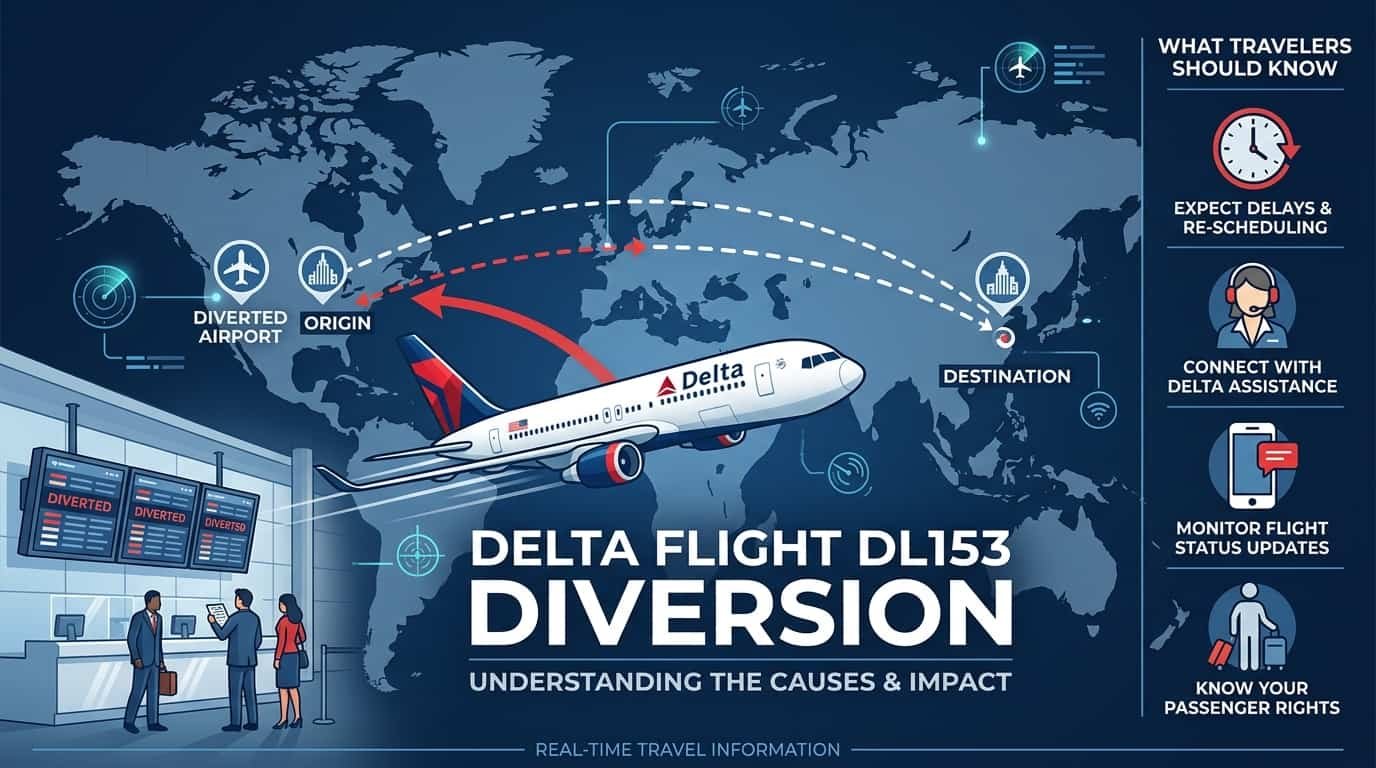
Air travel is usually smooth and predictable. However, unexpected situations can sometimes force a plane to land at a different airport than originally planned. One recent topic that caught travelers’ attention is the Delta flight DL153 diversion. Many passengers searched online to understand what happened, why flight diversions occur, and what travelers should do in similar situations.
In this guide, you will learn everything about the delta flight dl153 diversion, including common reasons behind diversions, how airlines handle emergencies, what passengers can expect, and practical travel tips to reduce stress during unexpected delays.
Whether you fly often or only travel occasionally, understanding flight diversions can help you stay calm, informed, and prepared.
What Is a Flight Diversion?
A flight diversion happens when an aircraft changes its planned route and lands at a different airport than originally scheduled.
Diversions are more common than many travelers think. Airlines prioritize safety above everything else. Therefore, pilots may decide to divert a flight due to weather, medical emergencies, technical concerns, or airport issues.
In the case of the delta flight dl153 diversion, travelers became curious because diversions often create confusion and delays. However, these decisions are usually made to protect passengers and crew.
READ MORE GUIDE: Delta Flight Emergency Landing: What Passengers Need to Know
Common Reasons Flights Get Diverted
Here are the most common causes of airline diversions:
1. Severe Weather Conditions
Thunderstorms, snowstorms, heavy winds, or poor visibility can make landing unsafe.
For example:
- Lightning near the airport
- Heavy rain reducing runway visibility
- Strong crosswinds
Pilots may choose a safer nearby airport until conditions improve.
2. Medical Emergencies
If a passenger or crew member becomes seriously ill, the pilot may divert to the nearest suitable airport for medical assistance.
This is one of the fastest-growing reasons for diversions worldwide.
3. Technical or Mechanical Issues
Modern aircraft are extremely safe. Still, even small technical concerns are taken seriously.
Examples include:
- Engine warning signals
- Hydraulic system alerts
- Cabin pressure concerns
Even if the issue is minor, pilots often prefer caution.
4. Airport Congestion or Runway Problems
Sometimes airports experience:
- Traffic overload
- Closed runways
- Security incidents
In such cases, flights may reroute temporarily.
Understanding the Delta Flight DL153 Diversion
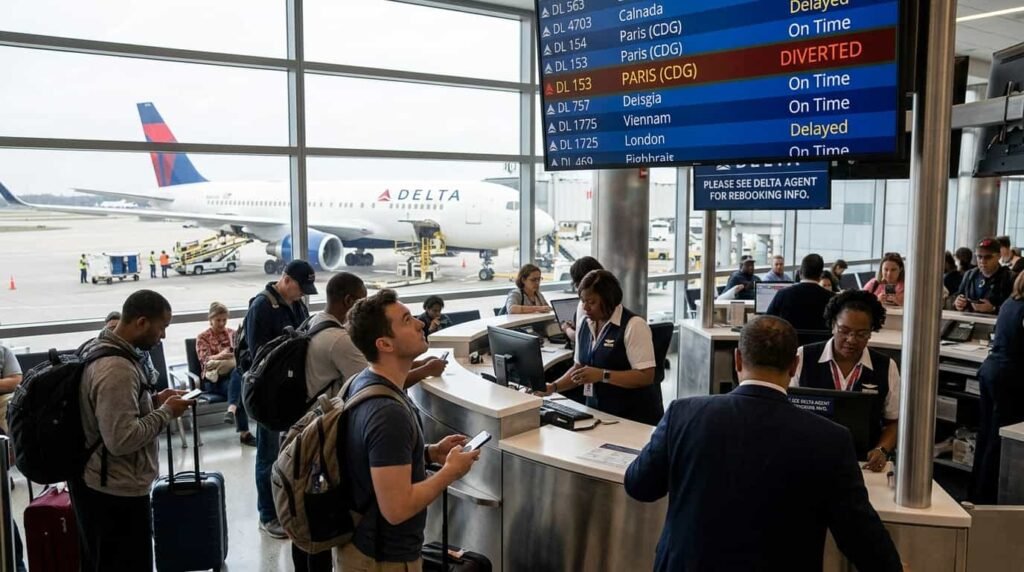
The delta flight dl153 diversion became a widely discussed topic because travelers wanted real-time updates and explanations. While exact operational details can vary depending on airline reports and airport communications, diversions generally follow strict aviation safety protocols.
How Airlines Handle Diversions
When a diversion occurs, airlines usually follow several important steps:
Step 1: Pilot Evaluation
The captain assesses the situation with air traffic control and airline operations teams.
Step 2: Passenger Announcement
Passengers receive information about:
- The reason for diversion
- Estimated landing time
- Next travel steps
Step 3: Safe Landing
The aircraft lands at the nearest suitable airport.
Step 4: Ground Coordination
The airline arranges:
- Fuel checks
- Maintenance inspections
- Passenger assistance
- New boarding plans
Step 5: Continued Travel or Accommodation
Passengers may:
- Continue on the same aircraft
- Transfer to another plane
- Receive hotel accommodations if overnight delays occur
Why Safety Always Comes First
Many passengers become frustrated during delays. However, the aviation industry follows strict international safety standards.
The decision behind the delta flight dl153 diversion likely involved careful risk assessment by trained aviation professionals.
Important Aviation Safety Facts
- Commercial aviation remains one of the safest travel methods.
- Pilots train extensively for emergency scenarios.
- Aircraft systems include multiple backups.
- Diversions are preventive measures, not signs of disaster.
In most situations, a diversion actually demonstrates that airline safety systems are working correctly.
Step-by-Step Guide: What To Do During a Flight Diversion
Unexpected changes can feel stressful. Here is a simple guide travelers can follow during any diversion.
Step 1: Stay Calm
The first and most important step is remaining calm.
Flight crews are trained professionals. Panic only increases stress for everyone onboard.
Step 2: Listen Carefully to Crew Instructions
Cabin announcements contain important details about:
- Safety procedures
- Connecting flights
- Arrival updates
Avoid spreading rumors or relying on social media speculation.
Step 3: Check Airline Notifications
Most airlines send updates through:
- Mobile apps
- Email alerts
- Text messages
Keep your phone charged whenever possible.
Step 4: Understand Your Rebooking Options
If delays become lengthy, ask airline staff about:
- Alternate flights
- Meal vouchers
- Hotel accommodations
Step 5: Keep Essential Items Accessible
Always keep these in your carry-on:
- Medication
- Chargers
- Important documents
- Snacks
- Water bottle
This becomes extremely helpful during unexpected waits.
Real-Life Example of a Flight Diversion
Imagine a flight traveling from Europe to the United States. Midway through the journey, severe storms close the destination airport.
Instead of circling in dangerous weather, the pilots divert to another nearby airport with safer conditions.
Passengers experience delays, but the decision prevents possible risks.
Situations like this help explain why events such as the delta flight dl153 diversion occur. The main goal is always passenger safety.
Benefits of Flight Diversions
Although diversions can feel inconvenient, they offer important safety advantages.
Improved Passenger Safety
The biggest benefit is protecting lives during dangerous conditions.
Faster Emergency Response
Medical emergencies receive immediate airport assistance.
Reduced Operational Risks
Aircraft can undergo inspections before continuing travel.
Better Weather Avoidance
Diversions prevent risky landings during storms or poor visibility.
Common Mistakes Travelers Make During Diversions
Many passengers accidentally make the experience harder on themselves.
Here are mistakes to avoid:
Ignoring Crew Instructions
Always follow directions immediately.
Booking Tight Connections
Short layovers increase stress during delays.
Not Carrying Essentials
Checked baggage may not be immediately accessible.
Losing Patience With Staff
Airline employees are usually managing hundreds of passengers simultaneously.
Remaining polite often leads to better assistance.
How Technology Helps During Flight Diversions
Modern airlines now use advanced systems to improve communication during disruptions.
Mobile Apps
Passengers receive live updates instantly.
Flight Tracking Systems
Travelers can monitor route changes in real time.
Automated Rebooking
Some airlines automatically assign new flights during major delays.
These improvements help reduce confusion during situations like the delta flight dl153 diversion.
Travel Tips To Prepare for Unexpected Diversions
Preparation makes a major difference during travel disruptions.
Pack a Small Emergency Kit
Include:
- Toothbrush
- Medications
- Portable charger
- Extra clothing
Buy Travel Insurance
Travel insurance may cover:
- Hotel stays
- Meals
- Missed connections
Arrive Early at Airports
Extra time reduces stress if schedules change.
Keep Important Numbers Saved
Store:
- Airline customer service
- Hotel contacts
- Emergency contacts
Passenger Rights During Flight Diversions
Passenger rights vary depending on:
- Airline policy
- Country regulations
- Cause of diversion
What Airlines Often Provide
Depending on the situation, travelers may receive:
- Meal vouchers
- Hotel accommodations
- Rebooking assistance
- Transportation support
Weather-related diversions sometimes have different compensation rules than mechanical issues.
Always ask airline representatives directly for available options.
How Airlines Minimize Future Diversions
Airlines constantly improve operations to reduce disruptions.
Better Weather Forecasting
Advanced radar systems help pilots avoid dangerous conditions earlier.
Predictive Aircraft Maintenance
Technology identifies possible mechanical problems before flights depart.
Improved Scheduling Systems
Airlines now use smarter software to reduce airport congestion.
Even with these improvements, some diversions will always remain necessary for safety.
FAQ About Delta Flight DL153 Diversion
1. What does a flight diversion mean?
A flight diversion happens when an aircraft lands at a different airport than originally planned due to safety or operational reasons.
2. Why did the delta flight dl153 diversion happen?
Flight diversions can occur because of weather, medical emergencies, technical issues, or airport operational problems.
3. Are flight diversions dangerous?
No. In most cases, diversions are preventive safety measures designed to protect passengers and crew.
4. Do airlines compensate passengers after diversions?
Sometimes. Compensation depends on airline policies and the reason for the diversion.
5. Can passengers track diverted flights live?
Yes. Many airline apps and flight tracking websites provide real-time updates.
6. What should travelers do during a diversion?
Stay calm, follow crew instructions, monitor airline updates, and ask staff about rebooking or accommodations.
Final Conclusion
The delta flight dl153 diversion highlights an important reality of modern air travel: safety always comes first. While diversions can create delays and inconvenience, they are often necessary decisions made by trained professionals to protect everyone onboard.
Understanding why diversions happen can help travelers remain calm and prepared during unexpected situations. By following airline instructions, keeping essential items nearby, and staying informed through official updates, passengers can handle disruptions much more comfortably.
Air travel continues to be one of the safest transportation methods in the world. Events like the delta flight dl153 diversion demonstrate how aviation systems prioritize caution, preparation, and passenger protection above all else.
