

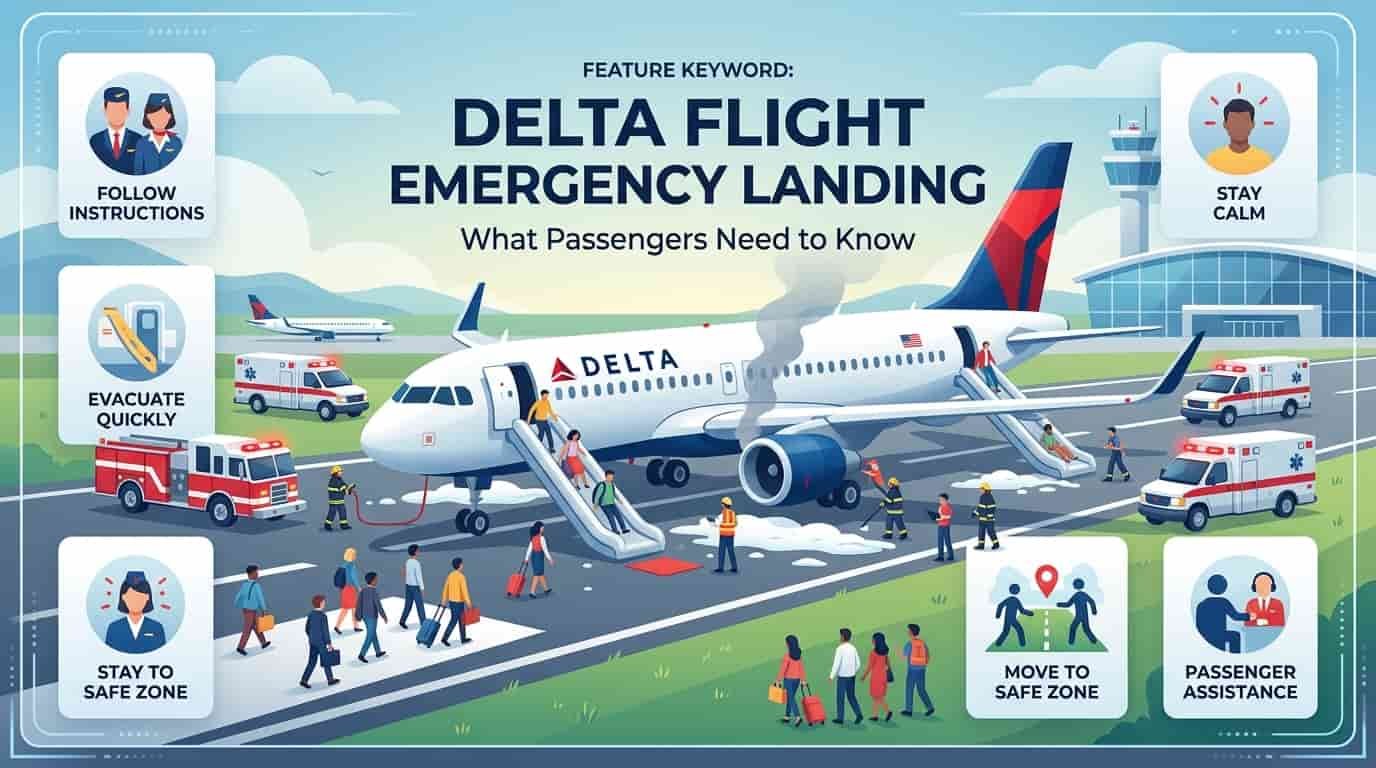
A delta flight emergency landing can sound frightening, especially when breaking news headlines spread quickly online. However, emergency landings are often controlled safety procedures designed to protect passengers and crew members. Pilots train for these situations regularly, and modern aircraft are built with advanced safety systems that help reduce risk.
In recent years, stories about emergency landings have gained attention because travelers want to understand what really happens during these events. Was there engine trouble? Did weather conditions force the plane to land? How do pilots make decisions under pressure?
This guide explains everything in simple, beginner-friendly language. You will learn what a delta flight emergency landing means, the most common causes, what passengers should do during an emergency, and how airlines keep travelers safe. We will also cover real-life examples, practical tips, common mistakes, and important facts that every traveler should know.
What Is a Delta Flight Emergency Landing?
A delta flight emergency landing happens when a Delta Air Lines aircraft must land sooner than planned because of a safety concern. The issue may involve:
- Mechanical problems
- Medical emergencies
- Severe weather
- Smoke or unusual smells
- Bird strikes
- Engine issues
- Cabin pressure problems
In many cases, the landing is precautionary rather than life-threatening. Pilots follow strict aviation safety procedures and work closely with air traffic controllers to land the aircraft safely.
Why Emergency Landings Happen
Emergency landings are rare, but they are an important part of aviation safety. Airlines prefer to land quickly whenever there is uncertainty because passenger safety always comes first.
Common Reasons Include:
| Cause | Explanation |
| Mechanical Issues | Problems with engines, hydraulics, or electronics |
| Medical Emergencies | A passenger or crew member needs urgent care |
| Weather Conditions | Storms, lightning, or poor visibility |
| Bird Strikes | Birds hitting engines or aircraft surfaces |
| Smoke Detection | Smoke or unusual odors inside the cabin |
| Cabin Pressure Problems | Oxygen levels or pressure become unsafe |
How Pilots Handle a Delta Flight Emergency Landing
Pilots train for emergency situations throughout their careers. Their goal is always to remain calm, assess the issue, and follow established safety procedures.
Step 1: Identify the Problem
First, pilots determine what is happening. Warning systems inside the cockpit help them quickly identify technical issues.
For example:
- Engine warning lights may appear
- Smoke detectors may activate
- Cabin crew may report unusual conditions
Step 2: Contact Air Traffic Control
The pilots then communicate with air traffic control. They explain:
- The nature of the emergency
- The aircraft’s location
- The requested landing airport
Controllers help clear airspace and prepare emergency crews on the ground.
Step 3: Prepare the Cabin
Flight attendants inform passengers and provide safety instructions. Travelers may be asked to:
- Fasten seat belts
- Remove sharp objects
- Review emergency exits
- Stay calm and seated
Step 4: Land the Aircraft Safely
The aircraft lands at the nearest suitable airport. Emergency vehicles are often waiting as a precaution.
Even when fire trucks and ambulances appear dramatic, they are standard safety procedures.
Real-Life Delta Flight Emergency Landing Examples
Understanding real examples helps travelers feel more informed and less anxious.
Engine Trouble After Takeoff
In one widely reported case, a Delta aircraft experienced engine vibrations shortly after takeoff. The pilots immediately turned back to the departure airport.
Because the crew followed safety procedures quickly:
- The aircraft landed safely
- No injuries occurred
- Passengers were moved to another flight
This example shows how aviation safety systems work exactly as designed.
Medical Emergency on Board
Another common reason for a delta flight emergency landing involves medical situations.
For instance, if a passenger experiences:
- Chest pain
- Breathing difficulty
- Severe allergic reactions
Pilots may divert to the nearest airport so emergency medical teams can respond immediately.
What Passengers Should Do During an Emergency Landing
Many travelers panic because they do not know what to expect. Staying calm and following instructions makes a major difference.
Step-by-Step Passenger Safety Guide
1. Listen Carefully to the Crew
Flight attendants are trained professionals. Pay close attention to every announcement.
2. Keep Your Seat Belt Fastened
Even if the seat belt sign turns off temporarily, keeping your belt fastened helps protect you from sudden turbulence.
3. Avoid Using Phones During Instructions
Passengers often try recording videos during emergencies. However, focusing on instructions is far more important.
4. Know the Nearest Exit
Count the rows between your seat and the nearest emergency exit.
Smoke or darkness can reduce visibility during emergencies.
5. Leave Belongings Behind If Necessary
In evacuation situations, personal items can block aisles and delay escape.
Common Myths About Emergency Landings
There are many misunderstandings about airline emergencies.
Myth 1: Emergency Landings Mean a Crash Is Likely
This is false.
Most emergency landings are precautionary. Pilots choose to land early before problems become dangerous.
Myth 2: Aircraft Are Unsafe
Commercial aviation remains one of the safest forms of transportation worldwide.
Modern planes have:
- Backup systems
- Advanced navigation
- Multiple safety checks
- Highly trained crews
Myth 3: Fire Trucks Mean Disaster
Emergency vehicles are usually deployed automatically whenever pilots declare an emergency.
Their presence does not mean the situation is catastrophic.
Important Facts About Delta Flight Safety
Delta Air Lines follows strict safety standards and maintenance procedures.
Key Aviation Safety Facts
Regular Aircraft Maintenance
Aircraft undergo:
- Daily inspections
- Scheduled maintenance checks
- Engine monitoring
- Safety testing
Pilot Training
Pilots regularly practice:
- Engine failures
- Emergency descents
- Severe weather responses
- Evacuations
Cabin Crew Training
Flight attendants are trained in:
- Emergency evacuation
- CPR and first aid
- Fire response
- Passenger management
These preparations help ensure that a delta flight emergency landing is handled professionally and safely.
Benefits of Emergency Landing Procedures
Although emergency landings sound alarming, these procedures exist to protect everyone onboard.
Main Benefits
Faster Access to Help
Passengers receive immediate assistance if:
- Someone is injured
- A medical issue develops
- Technical inspections are needed
Reduced Risk
Landing early prevents smaller issues from becoming major emergencies.
Better Passenger Protection
Airports are equipped with:
- Fire rescue teams
- Medical personnel
- Emergency response crews
Tips for Staying Calm During a Flight Emergency
Fear and anxiety are natural during unexpected situations. However, staying calm helps both you and the crew.
Helpful Tips
Focus on Instructions
Avoid listening to rumors from other passengers.
Control Your Breathing
Slow breathing can reduce panic and help you think clearly.
Trust the Crew
Pilots and flight attendants train extensively for emergencies.
Avoid Social Media Panic
Posting online before understanding the situation can spread misinformation.
Common Passenger Mistakes During Emergency Landings
Travelers sometimes unintentionally make emergencies harder to manage.
Mistakes to Avoid
Ignoring Crew Instructions
This can delay safety procedures.
Blocking Aisles
Passengers grabbing luggage can slow evacuations.
Panicking Loudly
Fear spreads quickly in crowded cabins.
Standing Too Soon
Always remain seated until instructed otherwise.
How Airlines Investigate Emergency Landings
After a delta flight emergency landing, airlines and aviation authorities carefully review what happened.
Investigation Process
Data Collection
Investigators examine:
- Flight data recorders
- Cockpit communication
- Maintenance records
Aircraft Inspection
Mechanics inspect the aircraft for technical issues.
Safety Improvements
If necessary, airlines update procedures to improve future safety.
This process helps aviation remain highly reliable worldwide.
Frequently Asked Questions
Is a delta flight emergency landing dangerous?
Not always. Most emergency landings are precautionary and end safely without injuries.
What causes most emergency landings?
Common causes include medical emergencies, mechanical issues, severe weather, and smoke warnings.
Are passengers compensated after emergency landings?
Compensation depends on the situation, airline policies, and travel delays. Airlines often provide rebooking assistance and accommodations when needed.
How often do emergency landings happen?
Emergency landings are relatively rare compared to the millions of flights operating safely every year.
Should passengers panic during an emergency landing?
No. Staying calm and following crew instructions greatly improves safety for everyone onboard.
Can planes still fly safely with one engine?
Yes. Commercial aircraft are designed to continue flying safely even if one engine fails.
Final Conclusion
A delta flight emergency landing may sound frightening, but it is usually a carefully managed safety procedure designed to protect passengers and crew members. Modern aviation systems, pilot training, aircraft maintenance, and emergency response teams all work together to keep air travel extremely safe.
Understanding what happens during an emergency landing can reduce fear and help travelers feel more confident when flying. By listening to the crew, staying calm, and following safety instructions, passengers can help ensure the best possible outcome during unexpected situations.
While headlines often focus on dramatic moments, the reality is that emergency landings are examples of aviation safety systems working exactly as intended.
