

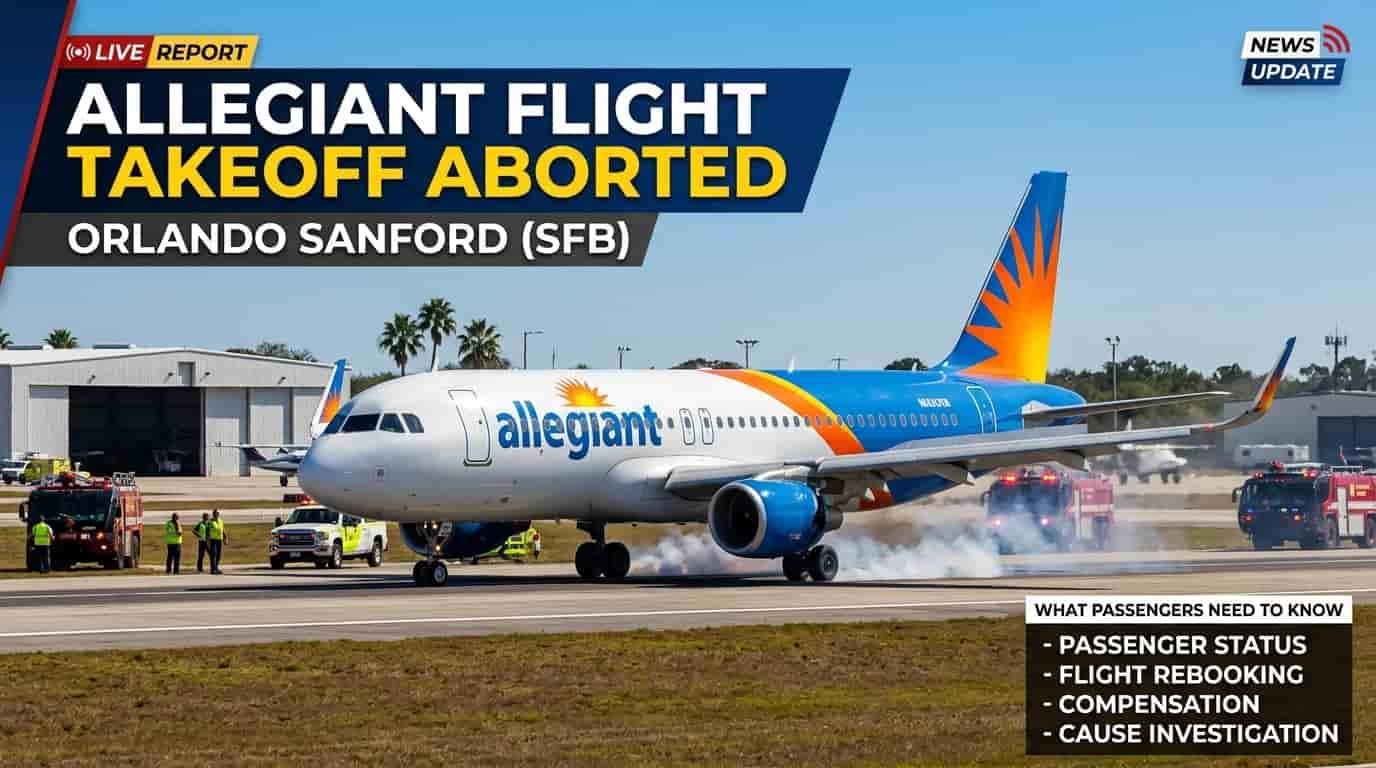
Air travel is usually smooth and routine, but sometimes unexpected situations happen before a plane even leaves the ground. Recently, searches for “allegiant flight takeoff aborted orlando sanford” have increased as travelers look for answers about what an aborted takeoff means and whether it is dangerous.
For many passengers, hearing the aircraft suddenly stop during takeoff can feel frightening. However, an aborted takeoff is often a sign that airline safety systems are working exactly as they should. Pilots are trained to react quickly whenever they detect a possible issue.
In this guide, we’ll explain the allegiant flight takeoff aborted orlando sanford situation in simple terms. You’ll learn why takeoffs get aborted, what happens during the process, how airlines keep travelers safe, and what passengers should do if they experience a similar event.
Whether you are a nervous flyer or simply curious about airline safety, this article breaks everything down in a beginner-friendly way.
What Does an Aborted Takeoff Mean?
An aborted takeoff happens when pilots decide to stop the aircraft before it leaves the runway. This decision can happen at low speed or even seconds before liftoff.
During takeoff, pilots constantly monitor:
- Engine performance
- Aircraft systems
- Weather conditions
- Warning alerts
- Runway conditions
If something does not look right, pilots immediately stop the plane.
Importantly, an aborted takeoff is not automatically an emergency. In many cases, it is a precautionary safety measure.
READ MORE GUIDE: Delta Flight Emergency Landing: What Passengers Need to Know
Why Pilots Abort Takeoffs
Here are the most common reasons:
Mechanical Warnings
Modern airplanes have advanced sensors. Even a small warning light can lead pilots to stop the aircraft.
Examples include:
- Engine alerts
- Brake system issues
- Hydraulic problems
- Flight control warnings
Weather Conditions
Strong winds, lightning, or sudden visibility changes can make takeoff unsafe.
Runway Obstructions
Pilots may see:
- Wildlife on the runway
- Another aircraft nearby
- Debris on the runway
Incorrect Aircraft Settings
Sometimes pilots notice a configuration issue before liftoff, such as incorrect flap settings.
Understanding the Allegiant Flight Takeoff Aborted Orlando Sanford Incident
The phrase “allegiant flight takeoff aborted orlando sanford” refers to an Allegiant Air flight that stopped its takeoff procedure at Orlando Sanford International Airport.
While details may vary depending on the specific flight event, situations like this generally follow standard aviation safety procedures.
Here’s what usually happens during these events:
- The aircraft accelerates on the runway
- Pilots detect a possible issue
- The takeoff is immediately rejected
- Brakes are applied firmly
- The aircraft slows and exits the runway
- Maintenance teams inspect the plane
Passengers may experience:
- Sudden braking
- Loud engine noise reduction
- Cabin announcements
- Delays while inspections occur
Although alarming, these actions are designed to protect everyone onboard.
Why the Allegiant Flight Takeoff Aborted Orlando Sanford Event Matters
Many travelers become nervous when they hear about aviation incidents online. However, understanding the reason behind an aborted takeoff can actually improve confidence in airline safety.
Aviation Safety Systems Work
The allegiant flight takeoff aborted orlando sanford situation highlights how carefully airlines monitor flights before departure.
Commercial aviation uses:
- Automated warning systems
- Strict pilot checklists
- Continuous monitoring
- Federal safety regulations
Pilots are trained repeatedly in flight simulators to handle aborted takeoffs safely.
Quick Decisions Save Lives
Pilots often have only seconds to decide whether to continue or stop.
Stopping the aircraft early is usually the safest option if there is uncertainty.
Step-by-Step: What Happens During an Aborted Takeoff
Understanding the process can help reduce fear for travelers.
Step 1: Aircraft Begins Acceleration
The plane moves down the runway while engines increase power.
Pilots monitor speed and aircraft systems carefully.
Step 2: Warning or Issue Appears
An alert, unusual sound, or system message may appear.
Sometimes pilots notice:
- Engine vibration
- Instrument irregularities
- Unsafe runway conditions
Step 3: Pilots Abort the Takeoff
The captain announces the rejection and activates braking systems.
The aircraft slows rapidly but remains under control.
Step 4: Emergency Teams Stay Ready
Airport fire and rescue crews may monitor the aircraft as a precaution.
This does not always mean there is a fire or danger.
Step 5: Plane Returns for Inspection
Maintenance crews inspect the aircraft thoroughly before another departure attempt.
Real-Life Example of an Aborted Takeoff
Imagine you are sitting near the wing during departure.
The aircraft speeds up quickly, and suddenly:
- You feel heavy braking
- Engines become quieter
- Passengers look confused
A flight attendant may calmly explain:
“The captain has aborted the takeoff due to a technical indication.”
Most passengers feel nervous initially. However, after inspection, the aircraft may either:
- Continue later
- Switch to another plane
- Delay until repairs are complete
This type of event is more common than many people realize.
Is an Aborted Takeoff Dangerous?
This is one of the biggest concerns travelers have after hearing about the allegiant flight takeoff aborted orlando sanford incident.
The good news is that aborted takeoffs are usually handled safely.
Why Aircraft Can Stop Safely
Commercial aircraft are designed with:
- Powerful braking systems
- Emergency stopping calculations
- Heat-resistant brakes
- Long runway safety margins
Pilots also calculate:
- Aircraft weight
- Runway length
- Weather conditions
- Stopping distance
Before every takeoff, crews ensure the aircraft can safely stop if necessary.
Common Passenger Reactions During an Aborted Takeoff

Many people experience:
- Anxiety
- Confusion
- Adrenaline
- Fear of crashing
These feelings are normal.
However, aviation experts often say that an aborted takeoff demonstrates safety systems functioning properly.
What You Should Do
If you experience this situation:
Stay Calm
Listen carefully to crew instructions.
Remain Seated
Do not stand or grab luggage unless instructed.
Avoid Spreading Rumors
Passengers sometimes panic after hearing incomplete information.
Wait for Official Updates
Airlines usually provide updates after inspection.
Tips for Nervous Flyers
The allegiant flight takeoff aborted orlando sanford event may increase anxiety for some travelers. Here are practical ways to feel more comfortable when flying.
Learn Basic Aviation Safety
Understanding procedures reduces fear.
Pilots train extensively for situations like:
- Engine failures
- Weather changes
- Aborted takeoffs
Focus on Statistics
Commercial aviation remains one of the safest transportation methods worldwide.
Use Relaxation Techniques
Helpful strategies include:
- Deep breathing
- Listening to music
- Watching movies
- Talking with travel companions
Avoid Catastrophic Thinking
An aborted takeoff does not mean the plane was about to crash.
In most cases, it means the pilots identified a potential issue early.
Common Mistakes Passengers Make
During unexpected flight events, passengers sometimes react poorly.
Avoid these mistakes:
Ignoring Crew Instructions
Always follow the flight attendant’s guidance immediately.
Recording Instead of Listening
Some travelers focus on filming videos rather than paying attention.
Assuming the Worst
Not every sudden stop indicates severe danger.
Sharing False Information Online
Unverified social media claims can create unnecessary panic.
Important Facts About Airline Safety
Here are some key facts travelers should know:
| Fact | Explanation |
| Pilots train regularly | Simulator training includes rejected takeoffs |
| Aircraft are heavily inspected | Maintenance checks happen before flights |
| Safety comes first | Delays are preferable to unsafe departures |
| Multiple backup systems exist | Aircraft systems are designed with redundancy |
These layers of protection help explain why commercial aviation maintains strong safety records.
How Airlines Handle Delays After an Aborted Takeoff
After an event like the allegiant flight takeoff aborted orlando sanford situation, airlines typically follow several procedures.
Maintenance Inspection
Technicians inspect:
- Engines
- Brakes
- Warning systems
- Flight computers
Passenger Communication
Airlines may provide:
- Delay announcements
- Rebooking options
- Meal vouchers
- Hotel accommodations in severe delays
Flight Rescheduling
The flight may:
- Depart later
- Change aircraft
- Be canceled if repairs are needed
FAQ About Allegiant Flight Takeoff Aborted Orlando Sanford
What caused the allegiant flight takeoff aborted orlando sanford event?
The exact reason depends on the specific flight, but common causes include mechanical warnings, weather concerns, or runway safety issues.
Is an aborted takeoff considered an emergency?
Not always. Many aborted takeoffs are precautionary actions taken to maintain safety before liftoff.
Are passengers in danger during an aborted takeoff?
Commercial aircraft are designed to stop safely during rejected takeoffs. Pilots train extensively for these situations.
Can passengers get compensation after delays?
Sometimes. Compensation depends on airline policies, delay length, and the cause of the disruption.
Do aborted takeoffs happen often?
They are uncommon but not rare. Pilots prefer caution whenever there is uncertainty.
Should nervous flyers worry about incidents like this?
Not necessarily. These situations often show that airline safety procedures are working correctly.
Final Conclusion
The allegiant flight takeoff aborted orlando sanford incident has drawn attention because sudden flight interruptions can feel dramatic for passengers. However, aborted takeoffs are an important part of aviation safety.
Pilots, maintenance teams, and airlines are trained to prioritize passenger protection above all else. When a flight is stopped before takeoff, it usually means crews identified a possible issue early and acted responsibly.
For travelers, understanding how these procedures work can reduce fear and build confidence in modern aviation systems.
The next time you hear about an aborted takeoff, remember this important fact: stopping the aircraft safely is often proof that the safety process is doing exactly what it was designed to do.
